
Views: 0 Author: Site Editor Publish Time: 2026-09-13 Origin: Site


The demand for glass elements in modern interior design is soaring. Consumers now expect flawless finishes on sleek dining tables, glass-front cabinets, and frameless shelving. Relying on manual glass cutting and edging introduces massive production bottlenecks. It causes high labor costs, inconsistent quality, and excessive material waste.
In this technical guide, we break down how automation resolves these critical manufacturing issues. You will discover the mechanics behind these advanced systems. Upgrading your production floor is essential for scaling operations and protecting your bottom line.
Unmatched Precision: Automated glass machining guarantees microscopic accuracy for complex furniture designs. It maintains strict tolerances across high-volume production runs.
High Efficiency: Automating the fabrication process drastically reduces labor costs, minimizes material waste, and accelerates production cycles.
Versatility Across Industries: These industrial machines function seamlessly across multiple sectors. They adapt to various glass thicknesses and specialized coating types.
All-in-One Capabilities: Modern equipment combines edging, milling, drilling, and polishing into a single, streamlined workflow without manual intervention.
A furniture glass processing center is a highly advanced, computer-controlled manufacturing system designed specifically for the glass fabrication industry. In engineering terms, it is a specialized machine that shapes, drills, routes, and polishes raw glass panels with zero manual intervention during the active machining cycle.
At its core, this equipment utilizes Computer Numerical Control technology. Specialized CAD/CAM software dictates the exact multi-axis movements of the mechanical tools. The operator simply inputs the design files and secures the material. The machine then executes the precise mechanical actions required to transform a raw sheet of glass into a finished furniture component.
The primary functions integrated into these advanced systems include:
Grinding and Polishing: Capable of executing flat edges, pencil edges, and complex bevels with optical clarity.
Milling and Routing: Essential for creating precise internal cutouts, such as those required for cabinet hinges, glass door handles, and cable routing in office desks.
High-Speed Drilling: Executing clean, fracture-free holes in various glass thicknesses using diamond-tipped drill bits and continuous center-water cooling.
The global manufacturing landscape is experiencing a definitive shift toward smart factory standards. As interior design trends heavily favor minimalist aesthetics with structural glass integration, fabricators face mounting pressure. They must deliver tighter tolerances without inflating unit prices. Furthermore, a severe shortage of skilled manual glassworkers is forcing factory managers to rethink their operational strategies.
The industry is rapidly moving away from labor-intensive traditional craftsmanship toward automated environments. Facilities adopting precision tools are capturing the most lucrative high-margin contracts. They can guarantee rapid turnaround times and zero-defect rates that manual shops simply cannot match. This technological leap is no longer a luxury but a baseline requirement for survival in the competitive fabrication market.
Transitioning from manual fabrication to automated systems requires capital investment, but the operational advantages offer a measurable and rapid return on investment. Here are the primary technical and financial reasons production managers choose to upgrade their facilities.
In modern furniture manufacturing, tolerances are measured in fractions of a millimeter. Automated processing eliminates the human error inherent in manual cutting and grinding. Driven by high-precision servo motors and rigid ball screws, the machine ensures that every single glass tabletop or cabinet door is dimensionally identical to the last. This consistency is absolutely critical when glass parts must fit perfectly into tight metal or wooden furniture frames without forcing or cracking.
Traditional glass processing often requires moving a single piece of glass across multiple single-purpose machines. A piece moves from a cutting table to a manual drill press, and then to a straight-line edger. Automated centers consolidate these exhaustive steps. Imagine an operator setting up a heavy glass pane once, pressing start, and watching the spindle seamlessly switch from a coarse grinding wheel to a fine polishing resin in seconds. This continuous workflow drastically speeds up production cycles and multiplies daily output capacity.
Handling raw, unpolished glass is a significant safety hazard in manufacturing facilities. By centralizing the workflow into one enclosed or semi-enclosed machine, the physical handling of the material is minimized. Furthermore, one trained operator can manage the entire process, effectively reducing the need for a large manual workforce. Factory managers can then reallocate labor to quality control or assembly. This optimizes overall payroll expenses while improving workplace safety.
Contemporary furniture design frequently features organic curves, asymmetrical shapes, and internal cutouts that are nearly impossible to achieve by hand without experiencing high breakage rates. Software integration allows manufacturers to easily import complex vector files. The machine then calculates the optimal toolpath to produce intricate shapes and custom edge profiles. This enables fabricators to confidently accept high-yield, premium custom orders.
Material scrap is a direct loss to a factory bottom line. Manual processing often leads to accidental chipping, micro-fractures, or dimensional errors that render a glass piece completely unusable. Precise digital calculations optimize the cutting and grinding paths. The system ensures the tools apply the exact amount of pressure and speed required for the specific glass thickness. This prevents accidental breakages during the machining process and maximizes raw material yield.
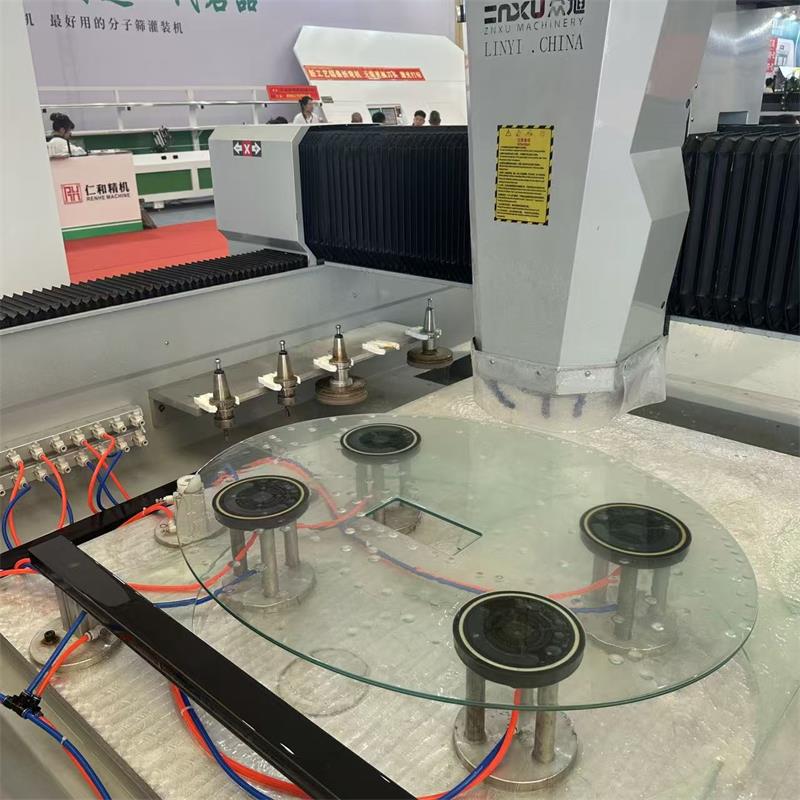
While highly effective for furniture production, investing in this technology opens doors to other lucrative glass manufacturing markets. The fundamental mechanics of routing, drilling, and polishing apply universally across various high-demand sectors.
The smart home market is expanding rapidly, driving demand for mirrors integrated with LED lighting and touch-screen interfaces. Functioning as a smart mirror glass machining center, the equipment can precisely cut and drill delicate glass without cracking the specialized reflective or conductive coatings. For instance, machines equipped with a 3000x2020mm working table handle large-format smart mirrors with incredible stability. The vibration-free spindles ensure that the micro-cutouts required for digital displays and capacitive touch sensors are executed flawlessly.
Modern bathroom designs heavily feature frameless shower enclosures. These require heavy, thick tempered glass ranging from 8mm to 12mm. Operating as a shower door glass processing center, specialized equipment with 3000x1500mm capacities effortlessly handles these heavy-duty panels. It creates the perfect hinge cutouts and highly polished edges required for safe, structurally sound shower doors. The automated toolpath ensures that the cutouts align perfectly with industry-standard brass or stainless steel hinges.
For construction and building materials, the machine can be utilized as an architectural glass machining center. It processes large-scale, heavy-duty glass used in commercial balustrades, office partitions, and exterior facades. Systems featuring massive 4000x3000mm tables and robust vacuum holding systems are specifically designed to manage the substantial weight and density of structural glass panels. This proves the incredible multi-industry versatility of the technology.
To understand the true value of automation, it is necessary to compare the traditional workflow with the modern advantage objectively.
Traditional methods rely on separate manual stations. A piece of glass is scored, snapped, moved to a manual drill press, and then passed through a straight-line edger. This method incurs hidden costs. High labor requirements for material handling, slow turnaround times due to machine-to-machine transfer, and high error rates from manual positioning constantly drain profits.
In contrast, a digital system provides an all-in-one workflow. The glass is loaded once, vacuum-sealed into place, and the machine performs all necessary operations sequentially.
Below is a comparative data model illustrating the operational differences:
Production Metric | Traditional Manual Processing | Automated Machining Center |
|---|---|---|
Handling Steps | 4 to 6 manual transfers | 1 single setup |
Labor Requirement | 3 to 4 operators per shift | 1 operator per machine |
Dimensional Tolerance | ± 1.0 mm to 2.0 mm | ± 0.1 mm to 0.5 mm |
Scrap/Breakage Rate | 5% to 8% depending on operator skill | Less than 1% controlled by machine |
Complex Cutouts | Very difficult with high risk of cracking | Standard automated procedure |
Consider a factory producing 500 custom glass tabletops per month. By reducing the scrap rate from 5% to 1% and cutting labor hours by 60%, the initial capital expenditure for the machine is typically recovered through operational savings and increased output capacity within a standard fiscal cycle.
When evaluating a CNC glass machining center for your production floor, looking beyond the basic specifications is essential. A reliable machine must possess specific mechanical and software attributes to handle the rigorous demands of continuous industrial fabrication.
In the realm of glass fabrication, a single piece of furniture glass often requires multiple distinct processes. Edge grinding, internal milling for hinges, and precise drilling must happen seamlessly. An Automatic Tool Changer is a critical component that allows the machine to switch between different diamond routers, polishing wheels, and drill bits. High-quality machines typically feature either a linear or carousel-style tool magazine holding anywhere from 10 to 20 tools. The integration of this system minimizes spindle idle time, significantly reducing the overall cycle time per glass sheet.
The spindle is the core mechanical engine of the equipment. Because glass is an incredibly brittle and dense material, the spindle must deliver substantial torque while maintaining absolute rotational stability. Vibrations during the milling or grinding process are the primary cause of micro-fractures and unacceptable surface finishes. Industrial-grade centers generally utilize direct-drive spindles ranging from 7.5kW to 15kW. Furthermore, continuous center-water cooling mechanisms within the spindle are non-negotiable. They extend tool life and prevent catastrophic thermal shock to the glass.
The physical hardware of a machine is only as effective as the software controlling it. For a production environment, the software must be intuitive yet robust. Look for systems that support parametric programming. This allows operators to input basic dimensions and automatically generate toolpaths for standard furniture shapes. Seamless DXF file importing is also crucial for custom designs. High-end software will feature collision detection. This simulation mode runs the program virtually to ensure the spindle will not collide with the vacuum pods, preventing costly equipment damage.
Accurate machining is impossible if the substrate shifts during operation. A premium processing center utilizes an advanced vacuum suction system to secure the glass firmly to the working table. This system relies on independently positioned vacuum pods that distribute downward pressure evenly. Additionally, modern machines utilize pneumatic pop-up reference stops or laser crosshair systems. These tools help the operator align the raw glass sheet perfectly with the machine zero-point before the vacuum is engaged.
Procuring heavy machinery is a strategic capital expenditure. Selecting the appropriate equipment requires a thorough internal audit of your current production metrics, future growth projections, and the specific market segments you intend to serve.
Working table dimensions dictate the maximum size of the glass you can process. It is vital to match the machine footprint to your largest typical products. If your facility focuses on architectural panels, you will require massive working tables. If your focus is strictly on smaller interior products like smart mirrors or end tables, a more compact 2500x1500mm working area is ideal. It provides faster axis travel speeds while occupying less valuable floor space.
Analyze your facility production volume and workflow style. For high-volume manufacturing, consider machines equipped with dual-station working areas. This configuration allows an operator to load and align a new piece of glass on one side of the table while the spindle actively machines a piece on the other side. This effectively eliminates loading downtime. Conversely, boutique custom fabricators might prioritize machine flexibility and multi-axis capabilities over sheer throughput.
The total cost of ownership extends far beyond the initial purchase price. In a highly competitive manufacturing landscape, machine downtime translates directly to lost revenue. Prioritize suppliers who offer comprehensive operator training programs. The transition from manual processing to digital operation requires a specific skill set. Investigate the availability of spare parts and look for manufacturers that provide remote diagnostic capabilities to troubleshoot software or calibration issues instantly.
Transitioning to automated glass fabrication is no longer just a technological luxury. It is a fundamental necessity for manufacturers aiming to maintain strict quality control and stay competitive. The data clearly indicates that relying on manual processing limits scalability and drastically increases overhead costs.
Whether your facility is producing sleek glass dining tables, operating as a dedicated shower door processing hub, or creating high-tech smart mirrors, the right machining center serves as the operational heart of a profitable factory. By investing in precision technology, manufacturers can ensure flawless finishes, reduce material waste, and confidently take on complex, high-margin projects.
To explore a full range of high-performance machinery tailored to your specific production needs and scale your operations efficiently, visit https://www.znxuglassmachine.com and upgrade your factory floor today.
Operating modern processing equipment does not require advanced programming degrees. While the underlying technology is highly complex, the user interfaces of contemporary CAD/CAM software are highly visual and intuitive. In practice, operators with basic computer literacy and an understanding of standard glass handling can typically learn to run standard production programs within a few days of standardized training. The transition is largely about shifting from manual physical labor to process monitoring.
Yes, a high-quality machine is inherently versatile. The primary differences between processing a delicate tabletop and a heavy architectural panel lie in the tooling used and the software parameters set. By simply changing the tools in the automatic magazine and loading a different digital file, the equipment can seamlessly transition between completely different product categories. The only limitation is whether the physical dimensions of the glass fit within the table limits.
Routine maintenance is highly structured and predictable. Because glass dust mixed with water creates an abrasive slurry, cleanliness is the most critical maintenance task. Daily protocols usually involve washing down the machine bed and checking the water filtration system. Weekly and monthly tasks include inspecting vacuum suction cups for wear, verifying the calibration of the tool changer, and ensuring the automatic lubrication systems are functioning correctly to ensure mechanical longevity.
Return on investment timelines vary based on production volume, local labor rates, and the specific cost of the machine. However, many mid-to-large scale fabricators report seeing a full return on investment within 12 to 24 months. This rapid return is driven by a drastic reduction in the manual labor hours required per piece, a significant decrease in material waste due to fewer human errors, and the newly acquired ability to bid on higher-margin custom orders.
The maximum thickness depends entirely on the spindle power and the specific diamond tooling utilized. Standard industrial machines equipped with 7.5kW to 15kW spindles can comfortably route and polish glass ranging from 3mm up to 19mm or even 25mm thick. For ultra-thick architectural glass, operators simply adjust the software to perform multiple passes, reducing the strain on the tool while maintaining a flawless edge finish.
Preventing chips and micro-fractures comes down to three critical engineering factors. First, you must maintain a continuous and high-pressure flow of center-water coolant to prevent thermal shock. Second, ensure absolute rigidity in your vacuum pod placement to eliminate material vibration. Finally, always match your spindle RPM and feed rate to the specific grit of the diamond router bit being used. Using dull tools or pushing the feed rate too fast will inevitably result in edge chipping.


