
Views: 0 Author: Site Editor Publish Time: 2026-09-10 Origin: Site


Glass is an unforgiving material on the shop floor. It is simultaneously incredibly hard and notoriously fragile. This leaves absolutely zero margin for error during fabrication. When an operator loads a premium sheet of low-iron or coated glass onto a worktable, the stakes are undeniably high. Scaling production while maintaining flawless edge quality requires far more than just skilled manual labor. It demands purpose-built technology.
I have seen countless fabrication facilities make the costly mistake of attempting to process glass using standard routers designed for wood or metal. This inevitably leads to screeching tool chatter, unacceptable breakage rates, and crippling production bottlenecks. To achieve true commercial throughput and optical-grade finishes, you need a specialized CNC glass machining center.
Navigating the procurement process can feel daunting given the sheer volume of technical specifications involved. In this comprehensive guide, we will break down the core hardware, intelligent software, and crucial fluid management features from a frontline engineering perspective. This ensures your next equipment investment directly aligns with your daily production goals.
Application Dictates Configuration: The structural and technical features you require depend entirely on your end product. Processing heavy structural facades demands vastly different specifications than crafting delicate interior mirrors.
Hardware is the Foundation: High-torque electro-spindles, massive vibration-dampening frames, and multi-axis articulation are non-negotiable for precision milling.
Water and Waste Management: Specialized internal coolant routing and closed-loop glass dust filtration protocols truly separate dedicated glass machinery from standard routers.
Software Drives Efficiency: Intelligent CAD and CAM integration paired with high-capacity automated tool changers drastically minimizes manual setup times.
Total Cost of Ownership: Features facilitating automated lubrication and remote diagnostics provide the most reliable long-term return on investment.
Analyzing the current trajectory of the glass fabrication sector reveals a massive acceleration toward automation and tighter engineering tolerances. Severe skilled labor shortages are forcing shop floors to transition from manual edge polishers to fully integrated, multi-interpolated environments. You can no longer rely on standalone drill presses to meet modern architectural demands.
Furthermore, contemporary architectural trends heavily favor oversized jumbo glass panels for seamless commercial facades. Simultaneously, we are witnessing a massive surge in the smart home sector. Modern glass must now accommodate complex internal cutouts for digital displays, capacitive touch sensors, and intricate LED lighting channels. Consequently, the market demands equipment capable of microscopic precision, adaptive tool wear compensation, and seamless integration with factory-wide production systems. Investing in advanced features is no longer a luxury; it is a strict requirement to remain competitive.
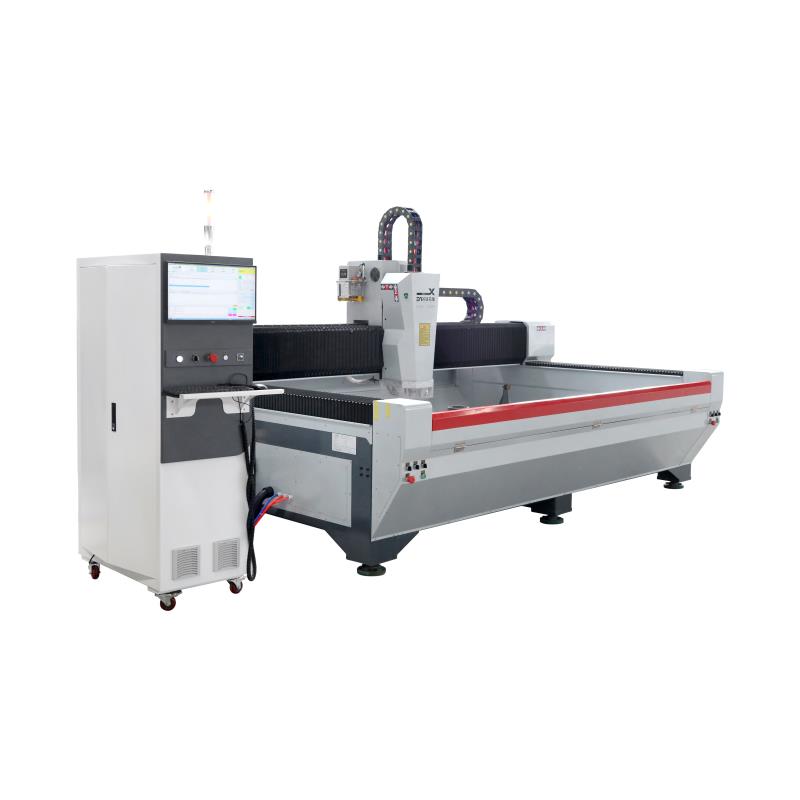
To objectively evaluate machine specifications, you must first understand the material science at play on the worktable. Unlike metals, which exhibit plastic deformation and yield when subjected to cutting forces, glass is an amorphous solid. It undergoes brittle fracture. Glass does not bend or peel. It simply chips, cracks, or shatters completely.
Machining this material is fundamentally a highly controlled grinding and micro-fracturing process. Diamond-impregnated tools are utilized to abrade the material away at high speeds. Because glass possesses a high Mohs hardness rating, the intense friction generated during this abrasion creates extreme localized heat. If this thermal gradient is not instantly neutralized with pressurized coolant, the sudden temperature shift will cause the pane to crack right before your eyes.
This is exactly why repurposing standard CNC machines fails. Wood and metal frames lack the sheer mass required to dampen the specific high-frequency vibrations generated by grinding glass. Even microscopic vibrations translate into visible micro-cracks along the edge. Moreover, glass machining requires a torrential flood of water cooling. Standard routers lack the heavily sealed electronics and specialized stainless steel drainage systems necessary to survive this harsh wet environment.
The anatomy of a premium glass processing machine is built around three critical pillars. These include structural rigidity, rotational torque, and tooling flexibility. Thoroughly evaluating these hardware components is the vital first step in your purchasing journey.
The number of interpolated axes dictates the geometric complexity the machine can comfortably execute. A 3-axis configuration moves linearly along the X, Y, and Z planes. This setup is highly efficient for flat processing tasks like standard hole drilling and flat edge grinding. However, introducing a rotational axis upgrades the system to a 4-axis or 5-axis machine. This advanced articulation allows for intricate three-dimensional shaping, variable-angle beveling, and the use of cup wheels for flawless polishing on highly irregular profiles.
The electro-spindle serves as the beating heart of the machine. When pushing heavy sintered diamond tools through thick dense glass, high rotational speed alone is inadequate. Torque is the true metric of performance. You need a high-torque water-cooled spindle typically ranging from 11kW to over 15kW. If a spindle lacks sufficient torque, you will hear the unmistakable screech of the tool bogging down. This leads to irregular feed rates and catastrophic edge chipping. Specifically, the spindle must feature a hollow shaft to allow coolant to flow directly through the center of the tool.
A universal approach is deeply flawed in glass fabrication. The physical properties of your specific product dictate that the equipment must be tailored to exact dimensions and thicknesses. Below is a quick reference guide matching industry applications to ideal machine configurations.
Industry Application | Recommended Model Series | Working Envelope | Key Technical Focus |
|---|---|---|---|
Architectural Facades | ZXX-C4030 | 4000mm x 3000mm | 15kW+ spindle, extreme payload capacity |
Shower Doors | ZXX-C3015 | 3000mm x 1500mm | Rapid axis acceleration, fast hinge routing |
Furniture & Shelving | ZXX-C2515 | 2500mm x 1500mm | Multi-axis profiling, high-capacity tool changer |
Smart Mirrors | ZXX-C3020 | 3000mm x 2000mm | Low-pressure vacuum, high RPM engraving |
Structural glass facades and heavy-duty balustrades require processing jumbo-sized sheets that are exceptionally thick and cumbersome. An architectural glass machining center like the ZXX-C4030 series provides a massive 4000mm by 3000mm working envelope. These applications demand a heavy-duty spindle capable of aggressively milling thick laminated glass to accommodate heavy spider fittings without stalling.
In contrast, the production of frameless shower enclosures thrives on high throughput and repetitive accuracy. A dedicated shower door glass processing center such as the ZXX-C3015 model prioritizes rapid axis acceleration to minimize cycle times across its 3000mm by 1500mm footprint. The machine must excel at rapid hinge cutout routing using standard architectural templates and precise handle hole drilling.
Furniture applications encompassing glass tabletops and intricate display cabinets require a high degree of artistic flexibility. Investing in a furniture glass processing center like the ZXX-C2515 guarantees access to complex edge profiling within a 2500mm by 1500mm zone. Because moving from a rough grind to an optical polish requires multiple tool changes, a fast and high-capacity automated tool changer is a strict necessity.
Finally, the rapid rise of integrated technology in interior design has created intense demand for specialized equipment. Mirrors are manufactured using relatively thin glass that is highly susceptible to breakage. A smart mirror glass machining center like the ZXX-C3020 requires extreme precision across its 3000mm by 2000mm table. Highly adjustable low-pressure vacuum controls are mandatory to prevent damaging the sensitive reflective backing during surface grooving and fine engraving.
Even the most rigid hardware is severely bottlenecked if the software running it is outdated or clunky. Modern CNC software acts as the vital bridge between engineering design and physical production. Seamless data transition from the design office to the factory floor is non-negotiable. The integrated software must automatically analyze imported vector geometry and generate the most efficient toolpaths. Crucially for glass, the software calculates optimal sweeping entry and exit points for milling tools. This ensures the router bit engages the fragile edge smoothly rather than plunging aggressively and causing blowouts.
Equally important is the management of water and abrasive particulate. This is perhaps the most defining characteristic of a purpose-built glass machine. Inadequate fluid management leads to the smell of burning diamond matrix and rapid tool wear. High-quality electro-spindles feature internal water cooling where pressurized coolant is forced directly down through the hollow shaft and out through the core of the diamond tool. This instantly flushes abrasive glass dust out of deep drill holes.
Because the working envelope is constantly subjected to a milky abrasive glass sludge, corrosion resistance is critical. The machine bed, tool magazines, and all exposed hardware must be constructed from industrial-grade stainless steel or treated with heavy-duty anti-corrosion epoxy coatings. Standard painted mild steel will rapidly rust, leading to structural degradation.
Procuring heavy machinery is a major capital expenditure. Savvy decision-makers look beyond the initial sticker price and carefully evaluate the total cost of ownership over the projected decade-long lifespan. The day-to-day reliability of the equipment is directly tethered to the pedigree of its internal components. Utilizing premium servo motors ensures precise repeatable axis positioning, while high-grade linear guide rails provide smooth vibration-free gantry movement.
In a high-volume processing facility, unexpected downtime results in immediate and severe revenue loss. Modern systems combat this by featuring internet-enabled remote diagnostic capabilities. If an obscure error code halts production, the technical support team can log into the control system remotely. They can adjust software parameters or identify a faulty limit switch in minutes, resolving issues that would otherwise require days of waiting for an on-site technician.
Investing in specialized purpose-built equipment is the only sustainable way to scale your daily glass production safely. Upgrading your shop floor dramatically improves edge quality, expands your fabrication capabilities, and significantly reduces costly material waste. Always ensure you match the specific machine configuration to your expected daily output. Prioritize rigidity, precision, and reliable fluid management to future-proof your facility against evolving industry demands.
Ready to eliminate production bottlenecks and achieve flawless glass processing? Visit znxuglassmachine.com to explore our complete catalog of industry-leading equipment. Contact our technical engineering team today to match the perfect CNC machining center to your specific shop floor requirements.
A 3-axis machine moves the cutting tool strictly in the X, Y, and Z linear directions. This configuration is highly efficient and cost-effective for flat processing tasks such as drilling holes, routing internal cutouts, and basic flat edge grinding. Conversely, a 5-axis machine adds two rotational axes allowing the spindle to tilt and rotate dynamically. This advanced articulation is essential for executing complex processing including variable-angle beveling, intricate three-dimensional shaping, and flawless edge polishing on curved glass profiles.
Yes, a versatile machine can process both materials provided it is equipped with the correct adaptive features. It requires a wide RPM range on the spindle to accommodate the vastly different tool speeds required for heavy milling versus delicate engraving. Additionally, it must feature highly adjustable dual-circuit vacuum pods to ensure delicate handling of thin glass while maintaining the immense holding power required for heavy architectural sheets. However, facilities with high production volumes generally achieve better operational efficiency by utilizing dedicated machines tailored specifically to each thickness.
The lifespan of a diamond tool is highly variable and depends on several factors including the thickness of the glass, the feed rates programmed into the software, and the efficiency of the cooling system. Machines equipped with high-pressure internal water cooling significantly extend tool life by flushing abrasive dust and preventing thermal degradation of the diamond matrix. Advanced software also includes automatic tool wear compensation which microscopically adjusts the toolpath to account for physical wear over time.
Standard maintenance requires diligent daily cleaning of abrasive glass sludge from the work area and vacuum pods to prevent seal failure. Weekly tasks typically involve greasing linear guide rails and ball screws to ensure smooth axis movement. Monthly, operators should inspect the water filtration system and verify internal spindle coolant flow. Purchasing a machine equipped with an automated centralized lubrication system can significantly reduce this manual maintenance burden.
Power consumption varies heavily based on the spindle size and vacuum pump capacity. A standard machine tailored for furniture glass might draw between 15kW to 25kW during active milling. Conversely, heavy-duty architectural machines equipped with 15kW spindles and dual high-capacity liquid-ring vacuum pumps can exceed 35kW to 40kW under full load. It is critical to verify your facility's electrical infrastructure and breaker capacities before installation.
Selecting spindle power comes down to your thickest continuous cuts. If your shop primarily processes 4mm to 8mm glass for mirrors or standard shower doors, a 9kW to 12kW spindle provides ample torque and excellent high-speed finishing. However, if you routinely mill deep cutouts into 15mm to 19mm monolithic glass or heavy laminated structural panels, upgrading to a 15kW or higher spindle is strictly necessary to prevent tool stalling and edge chipping.


