
Views: 0 Author: Site Editor Publish Time: 2026-07-19 Origin: Site


The industry shift toward heavy, frameless custom shower enclosures requires zero-tolerance precision for hardware mounting, edge safety, and structural integrity. Standard glass cutting methods simply cannot meet these strict demands. Inaccurate cutouts, micro-fractures from inferior tooling, and poor edge quality lead to tempered glass shattering. This causes hardware misalignment in the field and costly rejected batches. Integrating a dedicated Glass Milling Machine shifts production from high-waste, multi-step manual processing to scalable, high-yield manufacturing. This equipment ensures every panel is temper-ready and installation-compliant. You will learn exactly how advanced milling technology eliminates production bottlenecks. We will explore equipment variations, technical evaluation criteria, and implementation strategies to optimize your fabrication floor, ensuring your facility can handle the rigorous demands of modern architectural glass processing without compromising on quality or throughput.
Milling equipment dictates the structural viability of frameless shower doors by ensuring exact tolerances for hinge, clamp, and handle cutouts prior to tempering.
The choice between an automatic glass milling machine and a manual glass milling machine hinges on production volume, CAD/CAM integration capabilities, and labor costs.
Evaluating spindle precision, vacuum hold-down reliability, and water-cooling efficiency is critical to preventing thermal shock and micro-cracking.
Integrating precise milling directly impacts the final product's ease of maintenance; perfect alignments prevent structural gaps where dirt, grime, and soap scum accumulate.
Strategic implementation reduces post-tempering failure rates and minimizes field installation errors.
Frameless shower doors require complex internal cutouts rather than simple straight cuts. Hardware components like hinges require specific "mouse ear" notches. Handles demand precise circular holes. Structural clamps need exact edge cutouts to bear the heavy weight of thick architectural glass. Standard cutting tables only score and snap straight lines. They cannot produce these intricate internal geometries. When operators attempt to create these shapes manually, the results are often inconsistent, leading to structural weak points.
The physics of tempered glass dictate a strict production sequence. Absolutely all milling, drilling, and edging must be completed perfectly before the glass enters the tempering furnace. Once tempered, glass cannot be cut, drilled, or modified in any way. Any attempt to alter tempered glass will cause the entire panel to shatter into thousands of pieces. Therefore, pre-tempering precision is non-negotiable. The internal stresses created during the tempering process mean that even a microscopic flaw in a cutout will result in catastrophic failure either inside the furnace or during transport.
Micro-cracks generated by inferior routing tools create severe structural vulnerabilities. These microscopic defects often lead to spontaneous breakage during the intense thermal stress of tempering. Sometimes, the glass survives the furnace but shatters post-installation due to minor structural shifts. This results in catastrophic failure and significant liability for the fabricator. The energy wasted on tempering a panel that ultimately breaks represents a massive drain on factory resources.
Hardware misalignment carries a heavy financial impact. When hinge cutouts are off by just a fraction of a millimeter, field installers cannot properly mount the doors. This leads to installation failures, water leaks, and expensive warranty claims. Installers waste hours trying to adjust hardware to compensate for poor factory milling. This damages the reputation of the glass fabricator and strains relationships with installation contractors.
Imprecise milling creates a serious downstream maintenance problem. Even sub-millimeter installation misalignments create uneven gaps and seal offsets. These uneven spaces catch water and facilitate the rapid buildup of soap scum and grime. Precise milling ensures tight, uniform gaps that keep the shower enclosure clean and functional for the end user. When the glass fits perfectly, the silicone seals engage correctly, preventing water from escaping the shower enclosure and damaging bathroom floors.
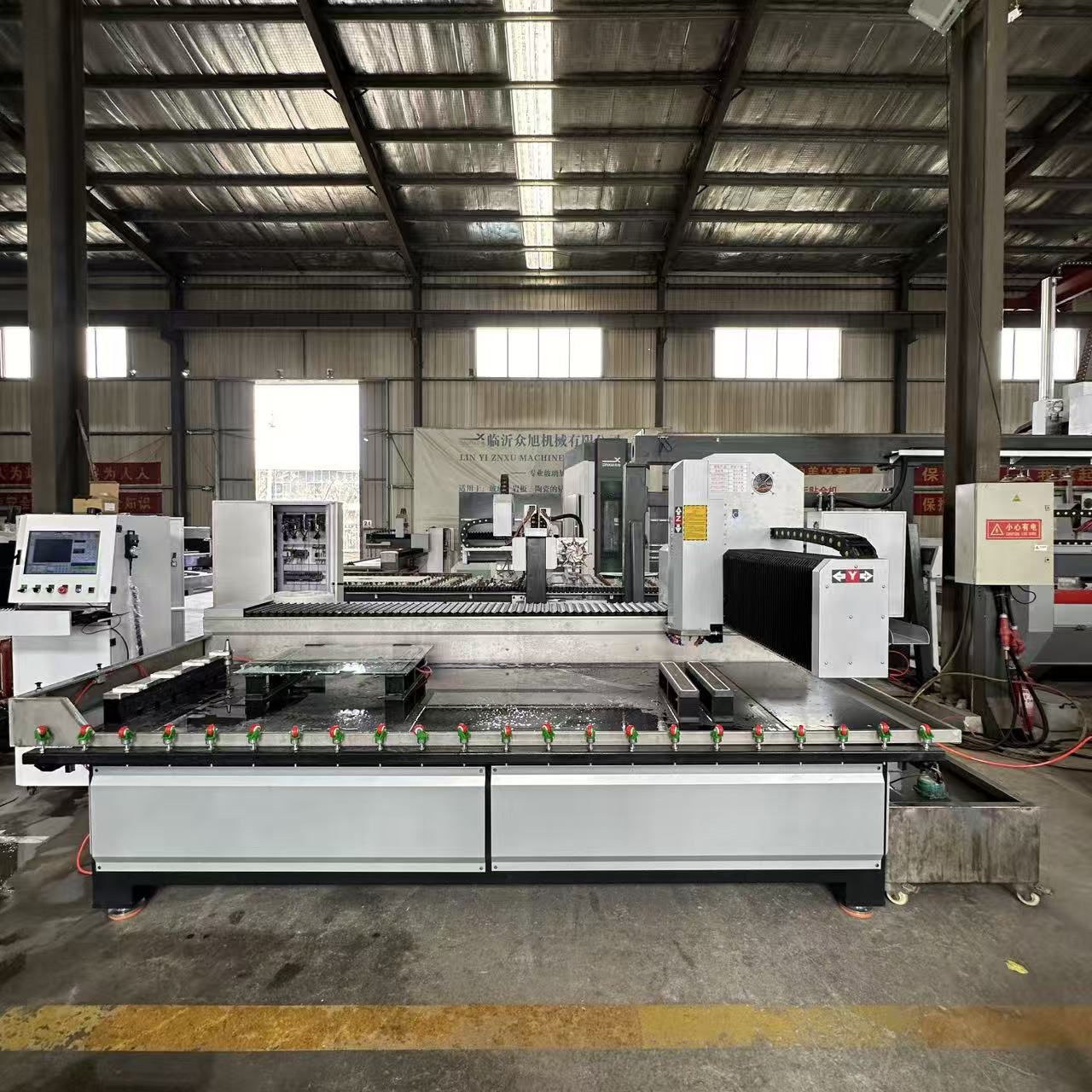
Modern glass factories follow a strict workflow to ensure quality. The process must be executed in a specific order to maintain the structural integrity of the glass.
Raw sheet cutting on a CNC table to establish the primary dimensions.
Edge grinding and polishing to remove sharp borders and establish the final width and height.
Precise routing and drilling via dedicated milling equipment to create hardware cutouts.
Electronic gage calibration to verify all dimensions and tolerances.
Washing and drying to remove all glass dust and coolant residue.
Tempering in the furnace to create safety glass.
Hydrophobic protective coating application for easy maintenance.
CNC interpolation allows machines to achieve exact hardware-matching geometries without manual templating. The spindle moves simultaneously along multiple axes to carve out complex shapes. This eliminates the human error associated with tracing physical templates. The software translates digital CAD files directly into flawless physical cutouts. Operators simply load the file, position the glass, and let the machine execute the toolpath with perfect repeatability.
Consolidating processes drastically improves factory efficiency. Traditional methods require moving heavy glass sheets between separate drill presses, manual routers, and grinding stations. A dedicated milling center performs all these tasks on a single bed. This reduces handling time, minimizes the risk of dropping panels, and accelerates overall throughput. Fewer touches mean fewer scratches and a higher yield of pristine panels.
Consumer-facing shower doors require aesthetically polished, safe edges. Raw, sharp cuts are dangerous and unacceptable for residential installations. Milling equipment transitions the glass from a hazardous raw state to a smooth, finished product. The spindle utilizes progressive diamond tooling to shape and polish the perimeter, ensuring the glass is safe to handle during installation and daily use.
Precise edge treatments are necessary to drastically reduce the risk of handling injuries. Bevels, safety chamfers, and radiused corners eliminate sharp points. A heavy-duty machine handles the specific demands of thick architectural glass. Shower doors typically use 3/8-inch or 1/2-inch thick panels, requiring robust spindles and rigid machine frames to prevent vibration during heavy material removal. Vibration is the enemy of a polished edge, so machine mass and rigidity are critical factors.
An automatic glass milling machine is best for high-volume factories processing complex custom frameless enclosures. These facilities rely on established digital workflows and require maximum output with minimal downtime.
The primary advantages include high repeatability and minimal operator intervention. Seamless CAD/CAM integration allows the machine to read digital files directly. Automatic tool changers (ATC) enable continuous operation by swapping drill bits and routing tools without stopping the machine. The main drawbacks are the high initial capital expenditure and the need for specialized programming training. These machines also demand strict environmental controls to protect sensitive electronics from moisture and glass dust.
A manual glass milling machine fits perfectly in low-volume custom shops or rework stations. They are ideal for highly specialized one-off architectural panels where CNC programming takes longer than the actual cutting process.
These machines offer a lower barrier to entry and a smaller factory footprint. They provide tactile feedback, allowing the operator to feel the cutting resistance during delicate operations. However, they suffer from slower throughput and a higher reliance on operator skill. Manual operation increases the risk of human error and often results in inconsistent edge finishes compared to automated systems. They require a highly skilled operator to achieve acceptable results.
A glass and slab milling machine serves diversified fabrication facilities processing both shower doors and stone countertops. These heavy-duty centers cross over between different hard materials, offering flexibility for mixed-material shops.
They provide high versatility across material types. The heavy-duty spindle capacity easily manages thick materials, and the robust frame offers excellent vibration dampening. The downside is that they may be over-engineered for a facility exclusively producing standard shower doors. Buying a multi-material machine for a single-material workflow often wastes capital and floor space. The tooling setups also require frequent changes when switching between stone and glass.
Machine Type | Best Application | Primary Advantage | Main Limitation |
|---|---|---|---|
Automatic CNC | High-volume shower door production | Unmatched speed and repeatability | Requires CAD/CAM expertise |
Manual Milling | Low-volume custom shops | Tactile feedback and low footprint | Relies heavily on operator skill |
Hybrid Slab Machine | Mixed glass and stone fabrication | Extreme rigidity and versatility | Over-engineered for pure glass shops |
Processing 8mm to 12mm shower door glass requires specific spindle specifications. The spindle must maintain consistent rotational speed under heavy loads. Drop-offs in RPM cause the diamond tool to bind against the glass, leading to chipping and tool breakage. A spindle rated for continuous duty is mandatory for production environments.
High torque at lower RPMs is necessary for continuous routing and core drilling. If the spindle lacks torque, it will bog down or burn the tool when plunging into thick glass. Consistent power delivery ensures smooth cuts and extends the lifespan of expensive diamond tooling. Operators should monitor spindle load meters to ensure they are not pushing the machine beyond its optimal cutting parameters.
Automatic Tool Changers (ATC) significantly reduce cycle times compared to manual tool changes. An ATC swaps a drill bit for a router bit in seconds, whereas manual changes require stopping the machine, using wrenches, and recalibrating tool heights. This automation keeps the spindle running and producing parts.
Vacuum pod placement and suction reliability are critical. The spoilboard system must prevent heavy glass panels from shifting during aggressive milling operations. If the glass moves even a millimeter, the entire panel is ruined. Integrating electronic gages is necessary to verify thickness and cutout tolerances pre-and-post-milling. This ensures strict quality control before the glass reaches the tempering furnace. Proper vacuum seals must be inspected daily to prevent suction loss.
Through-spindle coolant systems are critical to prevent thermal shock. Milling glass generates immense friction and heat. Without constant water flow directly at the cutting interface, the glass will burn, crack, and destroy the tool. External coolant nozzles are helpful, but through-spindle water delivery is the only way to ensure the core of the drill bit stays cool.
Integrated water filtration systems manage the resulting glass slurry. Glass dust mixed with water creates an abrasive paste. Proper filtration removes these particles, extending tool life and maintaining machine accuracy. Clean water prevents the spindle seals from degrading prematurely. Centrifuge systems or multi-stage settling tanks are highly recommended for high-production facilities.
Calculating return on investment requires analyzing reduced scrap rates, faster throughput, and lower labor costs per unit. Automated milling drastically cuts down the number of rejected panels. It also allows one operator to manage multiple machines simultaneously, maximizing labor efficiency on the factory floor.
Factories must weigh the trade-off between purchasing premium European CNC models versus cost-effective Asian imports. European models often boast advanced software and longevity. Asian imports offer rapid ROI and have significantly improved in rigidity and parts availability over recent years. The decision should be based on the availability of local service technicians and the specific production volume of the facility.
Precise edge milling and slot cutting directly affect the application of modern post-temper treatments. Many shower doors receive once-only easy-clean hydrophobic coatings. These coatings require perfectly smooth surfaces to bond correctly and provide long-lasting protection against hard water stains.
Poor edge preparation results in coating pooling, peeling, or failure around hardware cutout borders. Rough edges trap the chemical coating unevenly. Smooth, CNC-milled edges ensure the hydrophobic treatment applies uniformly, providing the end user with a truly easy-to-clean shower enclosure. This attention to detail reduces customer complaints and warranty callbacks.
Safe loading and unloading of large glass sheets require adequate floor space. The machine area must integrate smoothly with overhead cranes or vacuum lifters. Cramped spaces lead to handling accidents and broken glass. Operators need clear pathways to maneuver heavy panels onto the machine bed without straining.
Facilities often require specific upgrades before installation. These machines demand stable 3-phase power to operate the heavy-duty spindles. They also require clean, dry compressed air for the tool changers and vacuum systems. High-volume water supply and proper drainage infrastructure are mandatory to handle the continuous cooling requirements. Failing to prepare the facility infrastructure will delay installation and void warranties.
Expensive CNC machines often sit idle or underutilized due to a lack of CAD/CAM proficiency among floor staff. If operators cannot program the machine, it becomes a very expensive paperweight. The transition from manual cutting to digital fabrication requires a shift in factory culture.
To mitigate this, negotiate comprehensive vendor-supplied training during the purchase phase. Invest in intuitive software interfaces that simplify the programming of standard shower door cutouts. Hire or upskill specialized technicians who understand both digital geometry and glass behavior. Cross-training multiple employees ensures production does not stop if the primary programmer is absent.
Spindle failure or axis misalignment frequently occurs due to inadequate water filtration and glass dust contamination. Abrasive glass slurry destroys bearings and linear guides if left unchecked. Ignoring maintenance schedules will lead to catastrophic machine failure and weeks of downtime.
Implement strict daily preventative maintenance schedules. Operators must clean the machine thoroughly at the end of every shift. Invest in high-quality closed-loop water filtration to supply clean coolant. Maintain an on-site inventory of critical wear parts, including collets, vacuum seals, and diamond tooling, to prevent extended downtime while waiting for shipping.
Audit your facility's water, power, and quality-verification infrastructure to ensure compatibility with new milling equipment.
Request cycle-time studies from equipment manufacturers using your specific shower door dimensions to verify throughput claims.
Test your own custom DXF files on demo machines to evaluate the software interface and CAD/CAM integration.
Establish a strict daily preventative maintenance protocol for water filtration and spindle care before the machine arrives.
A: An edging machine only grinds and polishes the straight outside perimeter of a glass panel. A milling machine uses a multi-axis spindle to drill holes, route internal cutouts, and create complex geometries required for shower door hardware.
A: Yes, manual machines can handle 1/2-inch glass if equipped with a sufficiently powerful spindle and appropriate diamond tooling. However, the process is significantly slower and requires more operator skill than an automated CNC router.
A: Milling generates extreme friction and heat. Continuous water cooling prevents thermal shock, which causes glass to crack instantly. It also flushes away abrasive glass dust, preventing the diamond tools from burning and degrading.
A: Tool life depends on glass thickness, feed rates, and water cooling quality. Typically, a high-quality diamond router bit can process several hundred linear meters of glass before requiring replacement or redressing.
A: Chipping is usually caused by worn diamond tooling, inadequate water coolant flow, excessive feed rates, or spindle vibration. Improper vacuum hold-down allowing the glass to vibrate also causes severe edge fracturing.
A: All milling must be completed before tempering. Flawless milling prevents micro-cracks. If micro-cracks exist, the extreme heat and rapid cooling of the tempering furnace will cause the glass panel to spontaneously shatter.


