
Views: 0 Author: Site Editor Publish Time: 2026-07-23 Origin: Site


High-volume glass fabrication hits a hard bottleneck at the drilling and milling stages. You can cut and temper glass rapidly, but manual hole-drilling slows the entire floor down. This disparity creates massive operational friction. Manual and semi-automatic setups demand high setup times and rely entirely on operator skill. That reliance causes inconsistent hole quality, which leads directly to micro-fractures inside the tempering furnace. Operator-dependent throughput puts a hard ceiling on your daily output. Upgrading to automated drilling and milling systems solves this bottleneck. Automation synchronizes fabrication speeds across your facility, slashes scrap rates, and stabilizes unit economics. By removing the human variable from clamping and tool pressure, you get continuous processing and eliminate handling errors. Integrating a Glass Drilling And Milling Machine transforms your workflow, ensuring your facility meets demanding production schedules with absolute precision.
Cycle Time Reduction: Automated pneumatic clamping and simultaneous top/bottom drilling drastically reduce per-unit processing time.
Layout Efficiency: Choosing between vertical and horizontal machine footprints dramatically impacts material handling speed and shop floor utilization.
Setup Efficiency: Integrated tool-changing systems, rotary tables, and CNC controls minimize downtime between custom batches and mass production runs.
Scrap Mitigation: Precision spindle control and automated feed rates prevent edge chipping and micro-fractures, directly increasing net usable output.
Labor Reallocation: Shifting from manual operation to automated oversight allows facilities to scale output without linearly increasing headcount.
Semi-automatic systems heavily restrict daily production capabilities. Operators lose valuable time to manual glass positioning and mechanical clamping. Every manual adjustment introduces a slight delay. Over hundreds of cycles, these delays compound into hours of lost production. Manual measurement checks further stall the workflow. Operators must stop the machine, verify dimensions with a tape measure or calipers, and adjust settings. This constant starting and stopping prevents a smooth, continuous production flow on the shop floor.
Operator fatigue significantly impacts dimensional accuracy and throughput over an 8-hour shift. As the day progresses, manual handling of heavy glass lites becomes slower and less precise. Fatigue leads to misaligned holes and inconsistent edge quality. This degradation in precision directly increases the scrap rate. When operators are tired, they push drills too hard or fail to secure clamps properly. The machine's output drops, and the quality of the finished glass suffers right before it hits the washer.
To justify an upgrade, you must establish clear success metrics based on hard data. Target cycle times per hole or cutout should be defined based on glass thickness. Thin structural lites require different handling and spindle speeds than thick architectural panels. Automation should deliver consistent, rapid cycle times regardless of the substrate. You need to measure the exact seconds saved per operation to understand the true output gain across a full shift.
Acceptable tolerances for hole concentricity, positioning accuracy, and exit-edge finish must be strictly defined. Automated systems must meet or exceed these tolerances consistently to prevent blowout. Furthermore, you must track required uptime percentages, self-diagnostic capabilities, and maintenance intervals. A successful automated system maximizes uptime while providing clear diagnostic feedback to prevent unexpected breakdowns during a heavy production run.
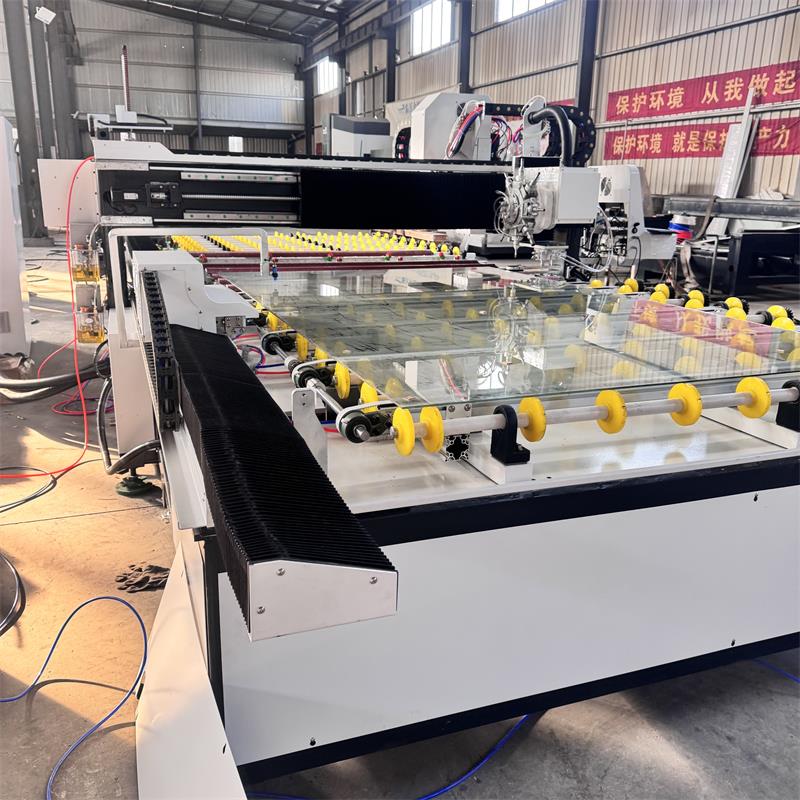
Evaluating machine footprints dictates your shop floor optimization strategy. Vertical glass drilling and milling machines optimize floor space significantly compared to horizontal beds. A vertical setup requires a fraction of the square footage. This allows you to install more equipment or improve forklift pathways within the same facility. Horizontal machines consume vast amounts of space, often dictating the layout of the entire production line and creating dead zones around the equipment.
Material handling efficiency improves drastically with vertical systems. They reduce operator handling and minimize the risk of glass-on-glass scratching. Loading and unloading vertical lites is ergonomically superior and faster for the operator. Additionally, vertical orientation utilizes gravity for superior coolant runoff and debris evacuation. This natural drainage keeps the work area clean, flushes glass dust away from the spindle, and extends the life of the diamond tooling.
Pneumatic clamping systems stabilize the glass instantly. They apply optimal pressure without requiring manual tightening or toggling. This immediate securing eliminates alignment errors and prevents micro-movements during drilling. When the glass is perfectly stable, the drill can operate at maximum speed without risking edge chipping. Pneumatic systems remove the variability of human strength from the clamping process, ensuring uniform hold-down force every single cycle.
Automated feeding and positioning conveyors maintain a continuous, uninterrupted production flow. They move the glass into the exact required position swiftly and accurately using servo motors. This eliminates the manual pushing and pulling of heavy glass sheets across caster tables. Conveyors ensure that the machine is always fed, maximizing spindle uptime and overall daily output.
Dual-sided drilling synchronization changes the game for output speed. The lower drill automatically rises to meet the upper drill coaxially. Both drills work simultaneously on the same hole axis. This synchronized movement halves the time required to drill through the glass. It is a highly efficient mechanical process that guarantees perfect alignment and eliminates core drop issues.
This dual-sided approach prevents blowout on the exit side of the glass. By meeting in the middle, the drills eliminate the pressure that causes chipping when a single drill breaks through the bottom surface. This precision eliminates the need for secondary, manual edge-finishing on holes. You get a perfect, clean hole straight off the machine, saving significant post-processing time before the glass moves to the tempering furnace.
Programmable spindle speeds and feed rates must be tailored to specific glass thicknesses. A 4mm lite requires vastly different parameters than a 19mm plate. Dynamic adjustment allows the machine to optimize its cutting force automatically. This prevents burning the tool on thick glass and avoids shattering thin glass. Proper speed and feed management directly correlate to higher output and lower tool wear.
Automated thickness calibration prevents deflection and breakage during transitions. When switching between thin substrates and heavy plate glass, the machine automatically adjusts its clamping force and drilling depth. Automated positioning reduces transition time when executing multiple hole patterns on a single lite. The machine moves swiftly between coordinates, executing complex patterns without operator intervention.
Throughput advantages heavily depend on the tool-changing mechanism. Rotary tables offer fast tool-to-tool exchange times compared to linear tool magazines. A rotary system spins the required tool into place in seconds. This rapid exchange is vital when performing multi-step operations on a single piece of glass. Linear magazines often require the spindle to travel to the end of the bed, wasting valuable production time during every swap.
Utilizing high-performance carbide inserts and automated tool swapping reduces changeover times drastically. Operations that require drilling followed by countersinking, milling, or polishing can be executed seamlessly. A CNC glass drilling and milling machine handles these transitions from minutes to seconds. This continuous operation maximizes spindle uptime and overall facility throughput.
CNC software expertly handles both batch processing and rapid customization. For identical parts, the software optimizes the tool path for maximum speed and minimal movement. For one-off architectural custom pieces, the software adapts instantly to new parameters. This flexibility ensures that neither mass production nor custom orders create a bottleneck on the floor.
Direct CAD/CAM integration eliminates manual data entry and human error. It removes programming lag at the machine interface. Operators simply load the DXF file, and the machine executes the exact specifications. This digital workflow ensures perfect accuracy and allows the facility to process complex orders rapidly without extensive manual setup.
Standard hole drilling is straightforward, but complex fabrication requires advanced milling. Milling uses routers to create internal and external profiles, such as radius corners and precise cutouts. A robust machine handles these complex geometries effortlessly. It transitions from drilling a simple hole to routing a complex hinge cutout without hesitation.
The machine executes complex routing and milling without requiring the glass to be moved to a separate workstation. This preserves part registration and accuracy. Moving glass between stations introduces the risk of misalignment and damage. Completing all operations on a single bed ensures perfect dimensional accuracy and significantly speeds up the total fabrication time.
Comparison of Processing Capabilities | ||
Process Type | Manual/Semi-Auto Operation | CNC Automated Operation |
|---|---|---|
Hole Drilling | Slow, prone to exit chipping | Rapid, dual-sided, clean exit |
Complex Milling | Requires multiple station moves | Completed on a single bed |
Tool Changes | Manual, takes several minutes | Automated, takes seconds |
Data Entry | Manual input, high error risk | Direct CAD/CAM integration |
Clamping | Manual toggles, inconsistent pressure | Pneumatic, instant, uniform pressure |
Shower door fabrication demands specific and repetitive hardware cutouts. Hinge notches, handle holes, and clamp cutouts must be executed with absolute precision. These specific requirements dictate the flow of a shower door production line. Inefficient processing of these cutouts creates massive bottlenecks in high-volume environments where hundreds of doors are processed daily.
A dedicated shower door glass drilling machine optimizes the sequence of these specific cuts. It minimizes tool travel paths and cycles. By grouping operations logically, the machine reduces wasted movement. This specialized optimization allows facilities to pump out shower enclosures at a significantly higher rate than using generalized equipment.
Shower enclosures require strict tolerance requirements prior to entering the tempering furnace. Any deviation in hole placement or notch depth will cause the glass to fail during installation. Tempered glass cannot be altered. Therefore, the preparation stage must be flawless to avoid catastrophic waste.
Automated milling ensures exact, repeatable hardware fitment. It reduces costly post-tempering rejections and onsite installation delays. When every piece of glass is milled to exact specifications, the tempering process yields a higher percentage of usable product. This repeatability directly boosts the bottom line by eliminating scrap and rework.
Calculating the return on an automated machine requires a clear framework. You must evaluate labor savings, scrap reduction, and increased daily output. An automated system reduces the need for manual operators, lowering daily labor costs. Simultaneously, the reduction in broken or misaligned glass saves significant material costs. Increased output means more billable product leaving the facility every day.
Compare the upfront cost of a fully automated CNC center against the ongoing, compound costs of running multiple manual stations. Manual stations require more floor space, more operators, and higher maintenance over time. The initial capital expense of automation is offset by the drastic reduction in operational expenses and the massive increase in production capacity.
Aggressive feed rates increase output but accelerate diamond core drill wear. You must balance the desire for speed with the cost of consumable tooling. Pushing a machine too hard will burn out drills rapidly, leading to increased downtime for tool changes. Finding the optimal feed rate ensures high output while maximizing tool lifespan.
Continuous, high-volume coolant systems and filtration are necessary to extend tool life. Clean coolant maintains edge quality and prevents thermal shock at high speeds. If coolant is contaminated with glass dust, it acts as an abrasive, destroying tools and ruining glass edges. Proper filtration is a non-negotiable requirement for high-speed automated processing.
Automated systems require strict preventative maintenance. Spindle lubrication, pneumatic line checks, and sensor calibration must be performed regularly. These routine tasks keep the machine running at peak efficiency. Ignoring these requirements leads to degraded performance and eventual mechanical failure.
Check coolant filtration systems daily to remove accumulated glass fines.
Lubricate spindle bearings weekly to prevent overheating during high-RPM cycles.
Inspect pneumatic lines and water traps monthly to ensure dry air reaches the valves.
Calibrate tool measurement sensors quarterly to maintain depth accuracy.
Evaluate these maintenance requirements against the catastrophic cost of unplanned production stops. A broken spindle halts the entire production line. Scheduled preventative maintenance is a minor inconvenience compared to the massive financial impact of unplanned downtime. Consistent upkeep ensures the machine continues to deliver high output reliably.
Bottlenecking at the programming stage is a significant risk. If the machine's software does not seamlessly communicate with the facility's existing ERP or cutting-optimization software, production will stall. Operators will be forced to manually enter data, negating the speed advantages of the automated machine. Poor integration leads to frustration and lost output.
Verify post-processor compatibility early in the purchasing process. Require vendor-led software integration and training during the pre-commissioning phase. Ensure that your IT team and the machine manufacturer establish clear communication protocols between systems before the machine ever cuts a piece of glass.
Transitioning from manual machine operation to CNC programming requires a massive shift in operator skills. Workers must learn tool calibration, digital system oversight, and basic software troubleshooting. If operators are not properly trained, they will struggle to run the machine efficiently, leading to errors and reduced output.
Invest in comprehensive, structured operator training programs. Focus on machine diagnostics, tool wear tracking, and basic software troubleshooting. Empower your operators to understand the digital interface. Proper training ensures a smooth transition and allows your team to maximize the capabilities of the new automated system.
High-output CNC machines demand specific facility infrastructure. They require a dedicated physical footprint, clean compressed air, and stable electrical power. Dry, oil-free air is critical for pneumatic systems; moisture will destroy the valves. Voltage fluctuations will cause the CNC controller to crash, ruining the glass currently being processed.
Conduct a detailed pre-installation site audit with the manufacturer. Ensure facility utilities strictly match operational specifications. Upgrade your air compressors and install power conditioners if necessary. Preparing your facility beforehand guarantees that the glass drilling and milling machine will operate flawlessly from day one.
Audit your current production data to identify exact cycle times and scrap rates at your manual drilling stations.
Request cycle-time simulation estimates for your most frequently run parts from equipment manufacturers.
Schedule a hands-on or virtual demonstration of the CNC software interface to verify CAD/CAM integration capabilities.
Conduct a facility infrastructure review to ensure your compressed air and electrical systems meet CNC specifications.
A: A glass drilling machine uses core drills to create cylindrical holes directly through the glass. A glass milling machine utilizes routers to cut notches, slots, and complex internal or external cutouts. Many modern automated systems combine both capabilities into a single CNC center for maximum efficiency.
A: Vertical machines are typically preferred for high-output architectural and shower door lines. They feature a smaller footprint, allow for easier ergonomic loading, reduce the risk of surface scratching, and utilize gravity for highly efficient coolant drainage and debris removal.
A: Cycle times can be reduced by 50% to 80% depending on the complexity of the part. This massive reduction is achieved through automated tool changes, rapid rotary tables, simultaneous dual-sided drilling, and the complete elimination of manual clamping and positioning.
A: Yes. Advanced machines feature programmable feed rates, automatic glass thickness sensors, and variable spindle speeds. These automated adjustments allow the machine to process a wide range of thicknesses dynamically, applying the correct pressure and speed to prevent breakage without operator intervention.
A: Typical maintenance includes daily coolant filtration checks to remove glass dust, weekly spindle lubrication to ensure smooth operation, and periodic inspections of the pneumatic system and sensors. Adhering to this schedule is critical to maintain continuous uptime and prevent costly unplanned breakdowns.
A: Pneumatic clamping secures the glass instantaneously with uniform pressure. This completely eliminates manual setup time and prevents micro-movements during the drilling process. Stable glass allows for faster spindle speeds and aggressive feed rates without causing edge chipping or fractures.
A: While general CNC machines can perform the task, specialized machines or software macros are optimized specifically for the routing paths and hardware profiles of shower enclosures. This dedicated optimization significantly increases batch speed and ensures perfect repeatability for high-volume hardware cutouts.


